1904
Frank Snook decides to leave South Lebanon
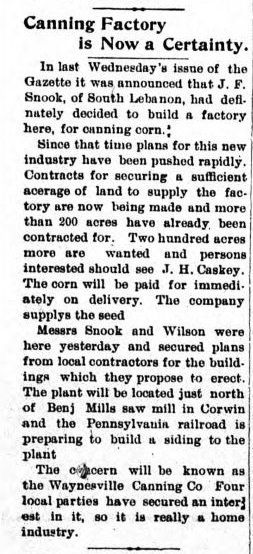
Frank Snook leaves South Lebanon to start a cannery in Waynesville.
1904- Frank Snook decides to leave South Lebanon- start cannery in Waynesville.
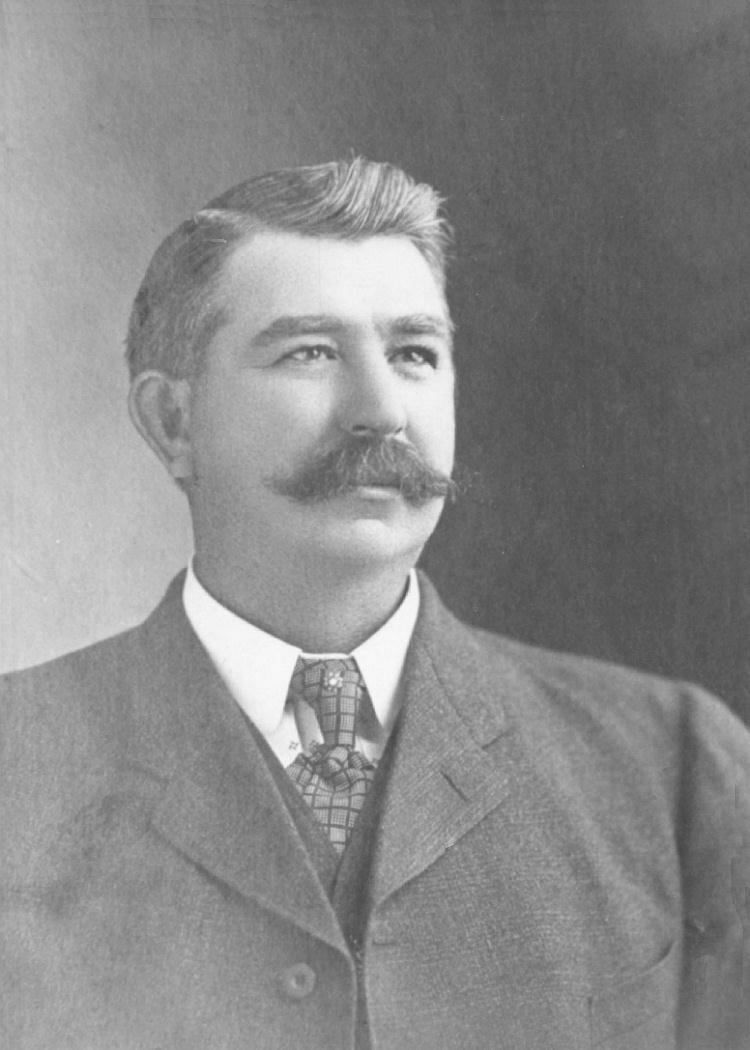
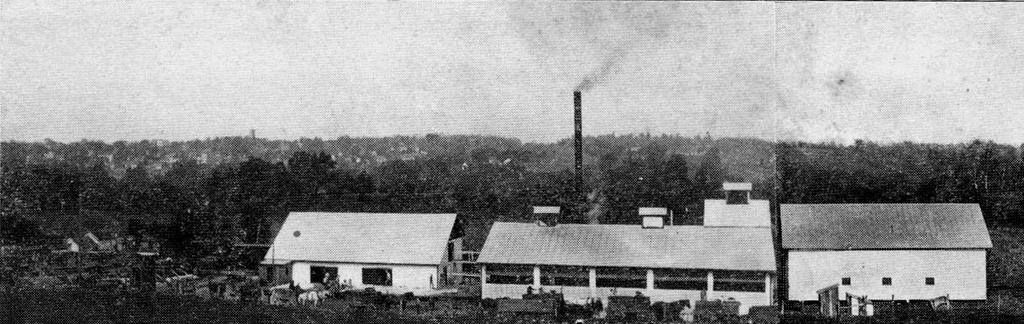
In nearly every agricultural community, someone starts a business which requires the direct co-operation of farmers to make a success. Whoever makes such a success must be persevering and courageous and must also have faith—faith in the elements, that there will be crops; and faith in humanity, that there will be plenty of help on hand when the crops are ready to be harvested . These requirements are demanded by farmers to enlist their co-operation, and the farmers know them, for they are a shrewd, cautious and self-reliant set of men. J. F. Snook, secretary and manager of the Waynesville Canning Co., fills these requirements. As a boy Mr. Snook earned his first money in the canning business, by driving a cart hauling away the refuse of the factory. From this humble work he advanced until he had satisfactorily done every kind of work in the factory. After reaching this point in his career, he became possessed with the idea of operating a factory for himself. Not having the necessary funds to start a business of this kind, he applied to his employer, Mr. J. M. Hayner, for financial assistance. Mr. Hayner discouraged young Snook in his determination to start in the canning business. Disappointed but not daunted, the young man turned away saying: “I am determined to can corn for myself”. Mr. Hayner called him back and told him the discouraging talk was only to find out if he were in real earnest—that it required one who would not become easily discouraged to make a success in business, go ahead with your undertaking and I will help you thru, was his final advice. The first canning season was a successful one. Then Mr. Snook organized a company and enlarged the plant. That season several discouragements were met with, viz.; drought, a kettle explosion and worst of all a low market. Notwithstanding these drawbacks, the plant was operated at a profit pleasing to all interested. At first the factory was a crude affair; all the work about it was tediously done by hand. But many thousands of dollars have been expended in improvements, until now the factory stands high among the most sanitary and up-to-date plants in the state. The grounds surrounding the plant are beautifully laid out and decorated with well cared for shrubs and flower beds. About one hundred people are employed during the canning season and the daily output is 40,000 cans.