1909
Sugar Corn
A 1909 letter arguing that the government's first sweet-corn seed came from a garden in Lebanon.
Who first began to grow it in Warren County.
How the Department of Agriculture got sweet corn seed from a garden in South Lebanon.
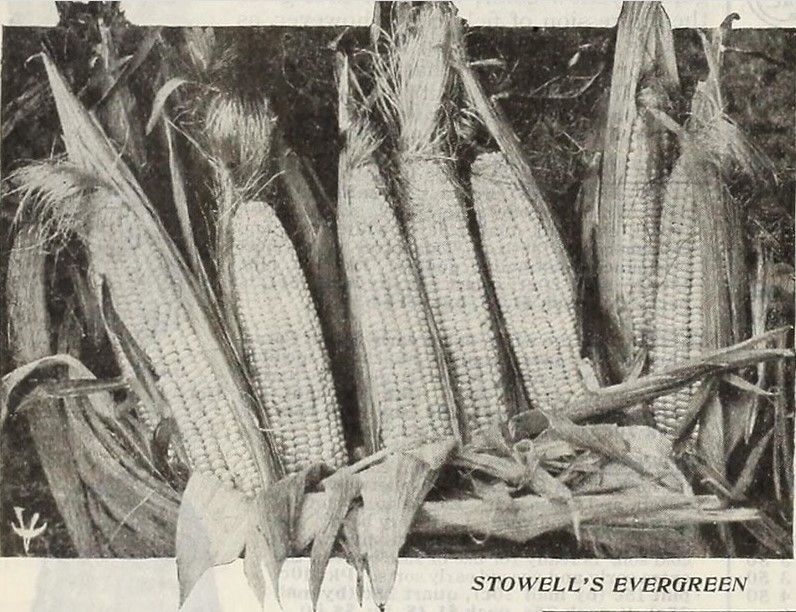
The following interesting letter is printed as the best means of securing data for an answer to the question propounded by the writer. The star will be pleased to hear from any of its readers who may be able to give information on the subject. It will be observed that the writer furnishes evidence that the first sugar corn grown by the Department of Agriculture in Washington was raised from ears grown in a garden in Lebanon, Ohio, and that these ears were from seed of sweet corn long raised in Moran County, and from the same seed sweet corn was first introduced into the region around the national capital. This is an interesting fact is it has always been the duty of the Department of Agriculture “to procure, propagate and distribute among the people new and valuable seeds and plants,” and before the establishment of this department there was an agricultural division of the patent office with a propagating garden at Washington. The writer of the letter is Lebanon man of ability and intelligence who has been in the government service under administrations of different politics for 40 years passed and has proved himself a faithful and efficient public servant.-
“Mr. Josiah Morrow, Lebanon, Ohio. My dear Sir:- your article in the Star on the beginnings of the sugar corn canning industry in Warren County omits what, to my mind, is of equal if not greater importance, that is: who was the pioneer producer of sugar corn in Warren County? There would be no canning without the corn. Will you not as the person apparently most interested in preserving data as to early events in the history of war and, investigate and report as to who first produce sugar corn in the county? My recollection is that Jim Roosa was the man who first produced it, though of course not to the extent that John Hayner probably did later. Mr. Roosa however, would sell roasting years when he had a surplus of Evergreen sugar corn. I have never since seen any corn that excelled his. The cob was small, and the grains large and deep and very sweet. He planted every week during the growing season and in the later fall he would pull up the stalks with ears just maturing by the roots with some soil sticking, and stack in his carriage house. By this method he often had good boiled corn on Christmas, boiled on the year. I feel quite certain that the pioneer producer of sugar corn in Warren County did not get his seed from the Department of Agriculture here. On the contrary I think the department got its first seed from Roosa’s seed. It is my impression that J. M. Roosa commenced raising the Evergreen sugar corn about 1860. In 1869, when I came here I brought half a dozen ears which I had raised in Dr. Anderson’s garden. I found no other corn known here than field corn, the same as we feed to stock. I gave two years of the sugar corn to the farmer from whom I usually purchased my supplies of eggs, chickens and garden truck. He used his first crop for seed. The Department of Agriculture purchased his second crop entire. This was the way sugar corn was introduced to the people of this vicinage and nearby Maryland and Virginia. If you will raise the question among some of those who are interested in the origin of modern comforts and conveniences, you may get on to the facts before they become merely traditions. Very truly yours, William Judson Morris, 1214 L. Street. Washington, D.C.September 6, 1909.”